
Car Driving Traffic Simulator
Lemon GlobalRacing
4.7231.00 Reviews
- Version
- 1.48
- Installs
- 10.00M
- Age Rating
- Everyone
Screenshots
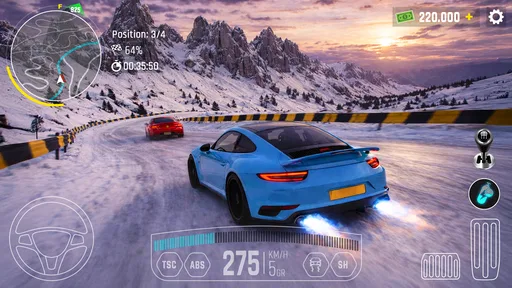
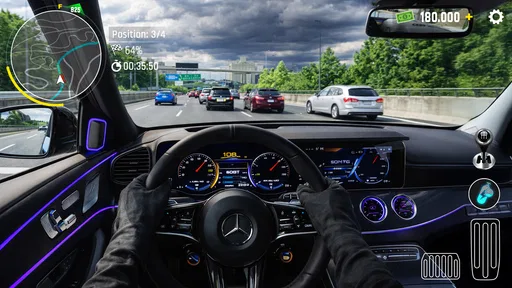
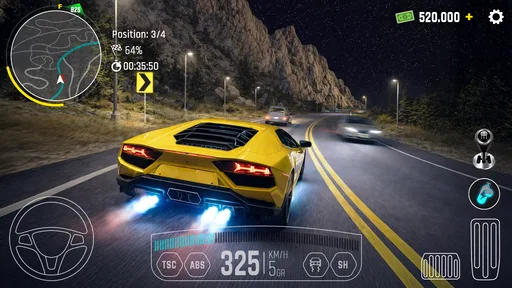
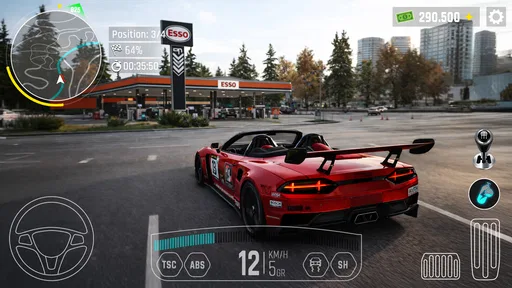
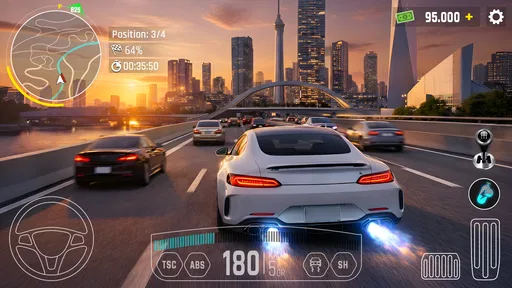
Our Review of Car Driving Traffic Simulator
 Analysis by Appyee
Car Driving Traffic Simulator is the kind of racing game I open when I want a quick driving session without committing to a long campaign. Its basic appeal is easy to understand: get behind the wheel, handle traffic, and improve through repeated runs. After spending time with it, I found that its strongest quality is the directness of the driving. It does not need a complicated story to make a short session feel worthwhile, although players looking for deep vehicle tuning or a large competitive ecosystem may eventually want something more ambitious.
Developed by Lemon Global, the game is free to download and aimed at Everyone, which makes it approachable for younger players as well as adults who simply want a straightforward mobile driving experience. It has built a sizeable audience, with more than 10 million installs and a 4.7 average from roughly 17 thousand ratings. Those figures suggest that its simple format has connected with a broad group of players, but they do not remove the need to understand what kind of racing experience this really is.
How the driving loop builds goals and momentum
I look at the driving loop as a small, repeatable way to set my own goals, rather than a campaign that dictates what I should do next. That makes it easy to share the game casually: one person can focus on a careful run, while another tries a bolder pace, without needing a long session or a complicated handoff. Before passing the device around, though, it is worth agreeing on who is playing and whether anyone plans to make an in-app purchase.
The first goals are practical rather than dramatic
What worked for me early on was the lack of unnecessary ceremony. I could concentrate on steering, judging gaps, and learning how traffic behaves instead of spending the opening minutes reading a large amount of story text. The first goal is essentially to become comfortable behind the wheel. That sounds modest, but it matters in a mobile game: the controls need to feel familiar before the player can care about longer-term progress.
I recommend treating the opening sessions as practice rather than trying to drive aggressively from the start. A new player may be tempted to squeeze through every gap, yet a calmer approach is more useful. Watch how quickly situations develop, leave yourself room to react, and use each run to identify which mistakes are caused by impatience. This creates a natural early challenge without requiring the game to overwhelm you with complicated rules.
The game’s traffic setting also gives ordinary driving decisions more weight than a traditional track racer. On a closed circuit, I usually focus on racing lines and braking points. Here, the important question is often whether a gap is genuinely safe. That change makes the experience feel closer to a driving exercise than a pure lap-time contest, even though it remains firmly within the racing category.
Unlocks give short sessions a reason to continue
The appeal of an unlock-focused game is not only the final reward. I pay attention to the small signals that tell me a run mattered: reaching a little farther, handling a busier stretch of road, or recovering from a mistake that would previously have ended the attempt. Those moments help the game avoid feeling like an endless sequence of identical drives.
Still, the motivation is strongest when I set a personal target before starting. I might decide to complete one careful run, improve my distance, or survive a section where I previously lost control. Without that self-imposed focus, repeated traffic sessions can begin to blur together. This is an important distinction: the game can provide a useful framework for progress, but the player’s own goals do much of the work in maintaining interest.
For that reason, I would not approach it expecting a role-playing style progression system with elaborate character development. Its rewards are best understood as driving milestones. Players who enjoy gradually opening up more of an experience should find enough structure to stay interested, while anyone who needs a constant stream of major new mechanics may find the pace restrained.
Reading progress without relying on spectacle
One of the more useful ways to play is to judge improvement through consistency rather than spectacular moments. A single lucky escape from traffic is satisfying, but being able to repeat a clean run is a better sign that the controls are becoming familiar. I found this especially helpful when deciding whether a failed attempt was caused by the game or by my own timing.
There is also a practical lesson in not chasing every possible challenge at once. If I focus simultaneously on speed, close passes, and avoiding every collision, I tend to make worse decisions. A better workflow is to choose one priority per session. First practise staying safe, then increase the pace, and only afterward attempt tighter manoeuvres. This turns the game’s repetition into deliberate training instead of random retries.
That approach is particularly suitable for short breaks. If I have only a few minutes, I can start with one clear objective and stop after achieving it. The game does not require a long uninterrupted evening to make sense, which is one of its most convincing advantages over larger racing titles that expect extended races, extensive menus, or lengthy upgrade planning.
The difficulty curve rewards patience, with a familiar limitation
The challenge develops through pressure from the road rather than through a heavy tutorial structure. As I become more comfortable, I naturally try to drive faster and take smaller openings. That creates the difficulty curve: the game becomes harder partly because my own ambitions increase. It is a pleasant form of escalation because I remain responsible for deciding when to push.
However, this also means the experience may feel less carefully staged than a conventional racing campaign. A track-based game can introduce a new circuit, rival, or event to mark a clear step forward. Here, the main change is often how confidently I handle the same basic driving problem. That is satisfying for players who enjoy mastery, but less compelling for those who need obvious variety at every stage.
My advice is to resist the urge to measure every attempt only by speed. In traffic, a slower run with better positioning can teach more than a fast run that ends immediately. I learned more by braking early and observing the available space than by repeatedly forcing risky overtakes. That is a small but important shift in mindset, and it makes the difficulty feel fairer.
Where the challenge can become repetitive
Repetition is the main limitation I noticed. The central pleasure comes from improving at driving through traffic, so the game’s strengths and weaknesses are tied to the same idea. If you enjoy refining timing, the repeated structure can be relaxing. If you expect every new session to introduce a substantially different kind of race, the loop may lose its freshness sooner.
This is where it helps to compare the game with common alternatives. A traditional arcade racer is usually better for dramatic races, visible opponents, and immediate bursts of speed. A realistic driving simulator may offer more detailed vehicle behaviour and a stronger sense of everyday road procedure. Car Driving Traffic Simulator sits between those expectations: it is more focused than a broad arcade racer, but it should not be mistaken for a full driving school or a highly technical motorsport simulation.
I also would not choose it as my first option if online competition is the main reason I play racing games. The attraction here is personal improvement in a traffic environment, not the social tension of racing human opponents. Likewise, players who want extensive customisation should look toward a game built around garages, tuning, and collection. This title is better for the act of driving itself.
Retention pressure and the role of in-app purchases
The game is free, which makes it easy to try without a financial commitment. Optional purchases cost $2.99 per item. I see that pricing as a reason to decide early whether the core driving loop already works for you. If the basic sessions are enjoyable, optional spending can remain a choice rather than a requirement. If the driving does not feel satisfying before paying, a purchase is unlikely to fix the underlying issue.
Free racing games often create pressure by encouraging players to chase the next unlock or return after a frustrating attempt. That pressure can be useful in small doses because it gives a failed run meaning. It becomes less comfortable when the player feels pushed to spend simply to remove an obstacle. My recommendation is to play several sessions without buying anything and judge whether progress feels earned through practice. That test is more informative than reacting to the excitement of an early reward.
A sensible routine is to set a stopping point. I might play until I complete a personal target, then leave the game rather than continuing through increasingly careless attempts. This keeps the loop enjoyable and reduces the temptation to treat every failure as a reason to purchase something. It also suits the game’s short-session character: the best experience comes from returning with a clear goal, not from forcing a long grind.
Parents may appreciate the Everyone content rating, but I would still explain the purchase option before allowing a child to play freely. The rating describes suitability of content, not how a player will respond to repeated unlock prompts or optional spending. A simple household rule about purchases is enough to avoid an unpleasant surprise.
Who gets the most from this game?
I think it is a good fit for someone who likes driving games but wants a lighter commitment than a full racing campaign. It works well for a commuter waiting for a connection, a student taking a short break, or anyone who enjoys repeating a skill until it becomes smoother. The traffic focus gives each attempt a clear practical question: can I read the road better this time?
It is also suitable for players who prefer self-directed challenge. You can decide whether the session is about survival, speed, or cleaner decisions. That flexibility is more valuable than it first appears, because it lets the same basic activity serve different moods. On a tired day, I can drive conservatively. When I want more tension, I can increase the pace and accept the risk of failure.
I would skip it if I need a strong narrative, a deep garage-management system, or a constant series of visually distinct events. I would also look elsewhere if realistic road rules are my priority. Although the traffic setting encourages awareness and timing, this remains a mobile racing game designed around accessible play, not a substitute for professional instruction.
A realistic everyday session
Imagine having ten minutes before an appointment. I would start one run with a narrow goal: stay composed through traffic rather than chase maximum speed. If I fail quickly, I would replay while changing only one decision, such as leaving more space before moving across. That makes the second attempt useful because I can tell whether the adjustment helped.
If the run goes well, I would use the remaining time to test a slightly faster pace. The important part is not merely reaching a better result; it is noticing whether the improvement came from better anticipation or from taking a lucky chance. This kind of short experiment is where the game feels most rewarding. It turns spare time into a small driving exercise without demanding a complete championship or a lengthy setup.
Device expectations and practical setup
The current version is 1.48, and the game supports devices running Android 9 or later. That makes checking the operating system worthwhile before downloading, especially on an older phone or tablet. A compatible device is only the starting point, though. Driving games benefit from a responsive screen, and crowded background activity can make any touch-based control feel less comfortable.
I suggest beginning with a quiet session rather than judging the game during a rushed moment. Use the first attempts to learn how much steering input is needed and whether your chosen grip on the phone feels natural. Small physical details matter in a traffic game because a delayed or exaggerated movement can turn a manageable gap into a collision.
The game’s broad audience is reflected in its Everyone rating, but accessibility should not be confused with simplicity for every player. Younger users may understand the basic objective quickly, while experienced racing fans may want more control depth. The same uncomplicated design that lowers the entry barrier can also limit the sense of technical mastery for specialists.
My progression verdict
After looking at its goals, unlock rhythm, difficulty, and retention pressure together, I see Car Driving Traffic Simulator as a focused driving game rather than an all-purpose racing package. Its progression works best when I treat every run as a chance to improve judgement. The game gives me enough direction to keep trying, but the lasting motivation comes from becoming more consistent in traffic.
Its biggest strength is that it makes ordinary decisions feel like the challenge. Choosing when to move, when to wait, and how much risk to accept provides a more thoughtful rhythm than simply holding the accelerator around a track. Its main weakness is that this same loop can become repetitive if I am looking for major new content or a long-term collection system.
Lemon Global has made a free game that is easy to sample and easy to understand. The 4.7 average and audience of over 10 million installs show that the concept has broad appeal, but my recommendation is more specific: try it if you enjoy short, repeatable driving challenges and personal improvement. Skip it if you need competitive multiplayer, elaborate tuning, or a campaign full of dramatic changes.
My final recommendation is to treat it as a compact traffic-driving practice game, not as a replacement for every other racing style. Start without spending, choose one goal per session, and pay attention to consistency rather than lucky close calls. If that method makes each attempt feel meaningful, the game can remain a satisfying quick-play option. If the repeated traffic loop feels too narrow after a few sessions, a conventional arcade racer or a deeper simulator will probably suit you better.
For me, that balanced position is what makes the game worth recommending. It does not need to pretend to be a huge motorsport experience. Its value is in giving the player a clear road problem, a reason to try again, and enough room to notice genuine improvement. That is a modest goal, but when the controls and pacing match your expectations, it is a surprisingly effective one.
Verdict
Strengths of Car Driving Traffic Simulator
- Realistic traffic behavior makes each drive feel more dynamic.
- Multiple camera angles improve visibility and driving control.
- Simple controls are easy to learn for new players.
- Short driving sessions work well for quick mobile gaming.
- Different road conditions add variety to repeated routes.
Limitations of Car Driving Traffic Simulator
- Frequent ads may interrupt gameplay between driving sessions.
- Some vehicles and upgrades require considerable in-game grinding.
- Traffic collisions can feel inconsistent at times.
- The game may become repetitive after mastering the main routes.
- Performance can vary on older phones or tablets.
Other Releases by Lemon Global
View All
BMX Playground
Sports4.4
Similar Picks in This Category
View All
Hill Climb Racing
Fingersoft4.3

Dr. Driving
SUD Inc.4.2

Traffic Rider
skgames4.5

Asphalt 8 - Car Racing Game
Gameloft SE4.6

Race Master 3D: Car Racing
Beresnev Games4.6

Extreme Car Driving Simulator
AxesInMotion Racing4.3
Frequently Asked Questions
What is Car Driving Traffic Simulator?
Car Driving Traffic Simulator is a mobile driving game focused on navigating busy roads while managing speed, steering, traffic, and different road situations. Instead of simply racing against opponents, the experience emphasizes realistic-looking driving, lane changes, avoiding collisions, and completing objectives. It is designed for players who enjoy casual vehicle simulation and want a more relaxed alternative to traditional arcade racing games.
How do you play Car Driving Traffic Simulator?
Gameplay generally involves controlling a car through traffic using on-screen steering, acceleration, and braking controls. Depending on the selected mode, you may need to drive a certain distance, avoid crashes, follow traffic flow, or complete other challenges. Smooth control is important because accelerating constantly can make it difficult to react to vehicles, turns, and obstacles appearing ahead on the road.
Does Car Driving Traffic Simulator require an internet connection?
The game may allow some driving activities to be played offline, which is useful when you are traveling or do not have reliable mobile data. However, certain features can depend on an internet connection, including advertisements, online services, updates, leaderboards, or additional content. Availability may also vary by device and version, so it is best to check the store listing before downloading if offline play is essential.
Is Car Driving Traffic Simulator suitable for children?
Car Driving Traffic Simulator is generally easy to understand because its main idea is simply driving through traffic and avoiding accidents. Nevertheless, parents should review the age rating and store description before installation, since the app may include advertising, optional purchases, or online elements. The game does not replace real driving instruction, and younger players should understand that its controls and traffic behavior are simplified for entertainment.
Does Car Driving Traffic Simulator contain ads or in-app purchases?
Like many free-to-download mobile driving games, Car Driving Traffic Simulator may use advertisements to support development, and some versions can offer optional purchases for vehicles, upgrades, currency, or removing ads. The exact system can change between updates and platforms. Before spending money, review the purchase details carefully and check whether the game provides a one-time ad-removal option or other paid advantages.
Play our best games!


